01 Why Layout Matters More Than Decor
Most event planners start with color palettes and centerpieces. Experienced ones start with floor plans. The physical layout of your event determines how guests move, where they congregate, and whether the space feels inviting or cramped.
A 150-person reception with round tables needs roughly 2,500 square feet of dining space alone — before you account for a dance floor, bar, buffet, or DJ. Get this wrong, and no amount of floral arrangements will fix the experience.
We see this constantly: a client books a beautiful venue, picks gorgeous linens, then realizes three days before the event that their table plan does not fit. Starting with layout prevents that.
02 Guest Flow vs. Overcrowding
Guest flow is the path people naturally take through your event. Where do they enter? Where do they get drinks? Where do they sit? If the bar is next to the entrance, you have a bottleneck. If the buffet faces a wall, you have a traffic jam.
The rule of thumb: allow 10–12 square feet per guest for a seated dinner, 6–8 for a standing cocktail event. Add 15% for service lanes, AV equipment, and staging.
We plan every delivery with flow in mind — where tables go relative to entrances, how chair rows align with sight lines, and where support equipment stays out of the way.
03 Rental Categories That Define Quality
Not all rental chairs are the same. A white resin folding chair costs $2/day. A gold Chiavari chair costs $6/day. A natural rattan King Louis chair costs $18/day. The difference is visible from across the room.
The same applies to tables, linens, and lighting. Plywood banquet tables with polyester covers look fundamentally different from farm tables with cotton runners. Your rental selections set the visual baseline for the entire event.
We carry over 200 items across seating, tables, decor, tents, staging, and AV — each chosen because it holds up under real event conditions.
04 Timeline Planning: Setup to Breakdown
A well-run event has a logistics timeline that runs parallel to the event timeline. Our standard delivery window is 4–6 hours before the event start. Setup takes 1–3 hours depending on complexity. Breakdown happens within 2 hours of event end.
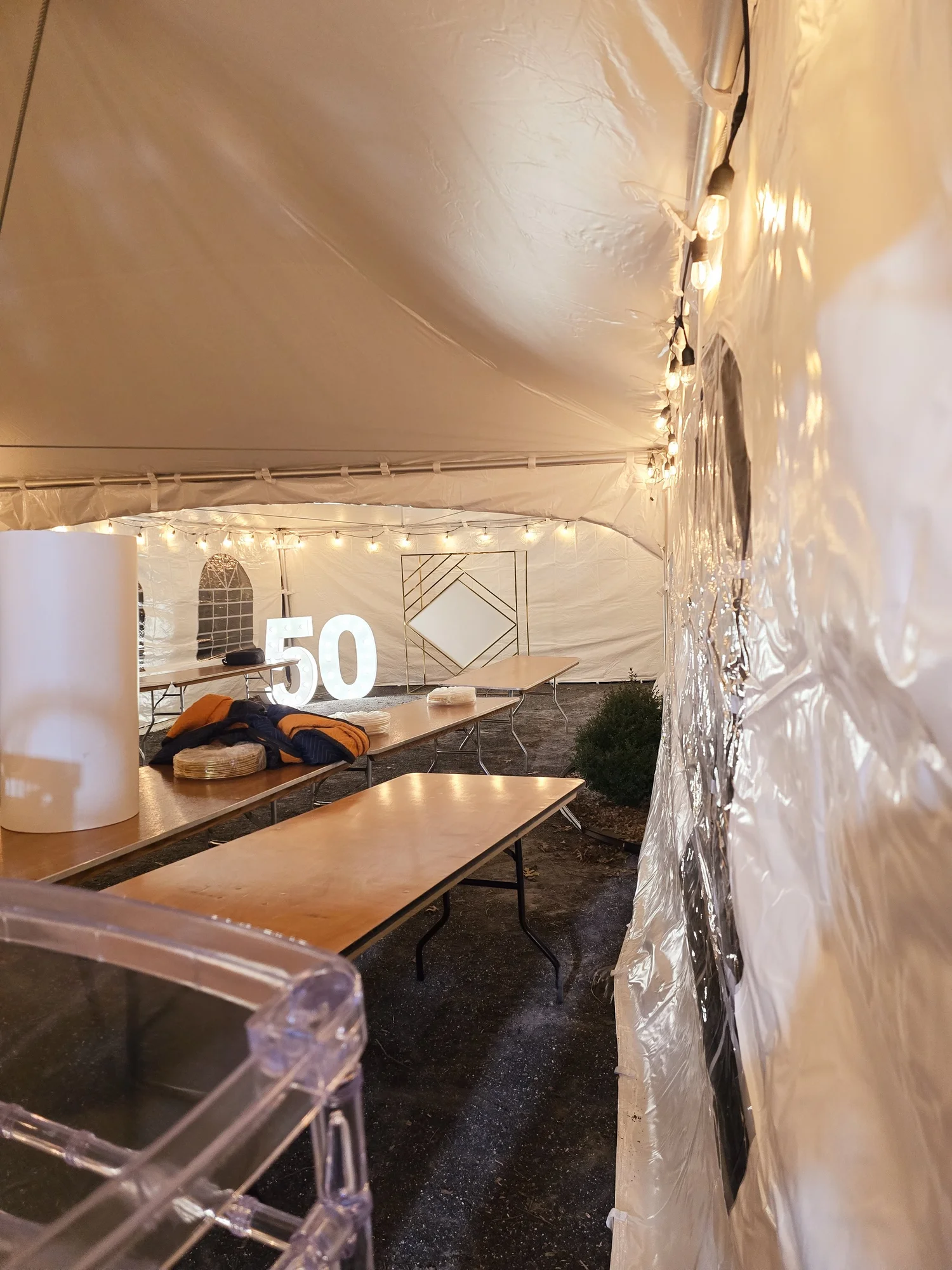
For tent installations, add a full day. Frame tents over 20×30 require crew assembly, staking or weighting, and safety inspection. If you are adding subflooring, lighting, or climate control inside the tent, plan for a second setup window.
We provide three delivery tiers — Standard, Premium (2-hour window), and Exact Time (30-minute window) — so your setup crew knows exactly when equipment arrives.